
YSC-306L intelligent stainless steel cement curing tank
Inside the Lab: Why the YSC-306L Intelligent Stainless Steel Cement Curing Tank is Becoming a Quiet Standard
If you spend any time in concrete QA labs (I do, probably too much), you know the conversation has shifted from “big rooms, big chillers” to compact, high-precision curing tanks. The YSC-306L Intelligent Stainless Steel Cement Curing Tank is one of those units people keep mentioning—partly for its consistency at 20 ±1 °C, partly because it just behaves sensibly day to day.
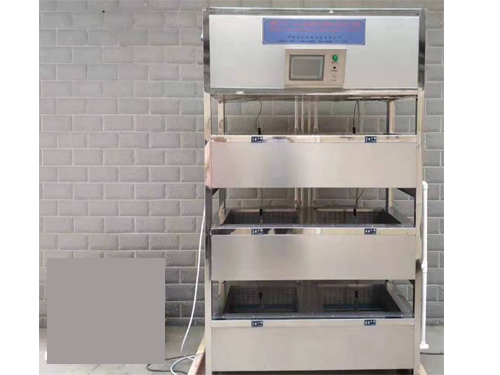
Industry backdrop (and why this matters)
Standards bodies have tightened expectations for curing stability—ASTM C511, EN 12390-2, you’ve seen the audits. Labs want tighter temperature uniformity, hygienic construction, and data-friendly control. Tanks like the YSC-306L Intelligent Stainless Steel Cement Curing Tank are stepping in where old tiled rooms and plastic tubs fall short. To be honest, the energy profile is better too.
At-a-glance specifications
| Origin | China |
| Power supply | AC220V ±10%, 50Hz |
| Heating power | 48 W × 6 (≈288 W total) |
| Constant temperature | 20 ±1 °C (per standards; real-world use may vary) |
| Overall dimensions | 1400 × 850 × 2100 mm |
| Construction | Stainless steel tank and frame (commonly 304-grade) |
How labs actually use it
Typical process: molds are demolded at ≈24 ±8 hours, specimens go into lime-saturated or potable water at 20 °C, then sit quietly until compressive tests at 3/7/28 days (and beyond). The YSC-306L Intelligent Stainless Steel Cement Curing Tank keeps the bath on target, and—this is underrated—its stainless shell resists the micro-scratches that harbor algae. Many customers say maintenance slipped from weekly scrubs to monthly rinses.
Industries: ready-mix plants, precast, cement producers, DOT labs, university research. Methods: ASTM/EN series for mortar and concrete cubes/cylinders; acceptance testing; mix design validation.
Advantages (the short list)
- Stable 20 °C setpoint with gentle circulation—better specimen uniformity.
- Hygienic stainless build; fewer water-quality headaches.
- Compact footprint relative to capacity; easier to deploy than full curing rooms.
- Straightforward 220V supply, modest heating load.
Comparison snapshot
| Vendor/Model | Temp control | Build | Certs | Lead time | Cost |
|---|---|---|---|---|---|
| YSC-306L | 20 ±1 °C, digital PID, ≈uniform bath | Stainless tank/frame | ISO 9001 factory, CE-like electricals | ≈3–5 weeks | Mid |
| Local Fabricator A | Manual thermostat, ±2–3 °C | Mixed metals/plastics | Varies | ≈1–2 weeks | Low |
| Imported Brand B | ±0.5 °C, data logging | Stainless premium | CE/UKCA, ISO 17025 options | ≈6–10 weeks | High |
Certification details should be confirmed at purchase; real-world specs may vary by configuration.
Customization and options
- Specimen racks for cubes/cylinders, removable for cleaning.
- Controller upgrades: PID tuning, data export, alarm outputs.
- Water management: recirculation pump, overfill protection, optional UV.
Field notes and test data
In factory QA trials, bath uniformity held within ≈±0.6 °C over 24 hours at 20 °C with standard circulation; a gentle lid-open recovery to setpoint occurred in ≈6–8 minutes. That’s comfortably within ASTM/EN curing tolerances. Your mileage may vary with room conditions, loading, and water volume.
Case study (quick): ready-mix lab
A mid-size ready-mix producer in Southeast Asia replaced two plastic tubs with one YSC-306L Intelligent Stainless Steel Cement Curing Tank. Result: fewer cylinder outliers and a 12% drop in re-tests over a quarter. The lab manager’s words, not mine: “less fiddling, more testing.”
Compliance, methods, service life
Designed to support ASTM C511, EN 12390-2 curing conditions and common test methods (ASTM C39/C109, EN 12390-3). With routine water changes and basic descaling, service life often runs ≈8–10 years.
Authoritative references
- ASTM C511 – Standard Specification for Mixing Rooms, Moist Cabinets, Moist Rooms, and Water Storage Tanks Used in the Testing of Hydraulic Cements and Concretes.
- EN 12390-2 – Testing hardened concrete: Making and curing specimens for strength tests.
- ASTM C39/C39M – Compressive Strength of Cylindrical Concrete Specimens.
- ASTM C109/C109M – Compressive Strength of Hydraulic Cement Mortars.


