0%

Table of Contents

The durability and flexibility of road surfaces are fundamental to global transportation safety, and the Asphalt Ductility Testing Machine stands as the critical instrument for ensuring these standards. By measuring the distance to which a bitumen binder can be elongated before breaking, engineers can predict how a road will perform under varying thermal stresses and heavy traffic loads, preventing premature cracking and potholes.

In the modern construction era, achieving high-performance infrastructure requires a precise understanding of material rheology. An Asphalt Ductility Testing Machine provides the empirical data necessary to validate the quality of bitumen, ensuring that the binder remains cohesive and pliable across a wide range of environmental conditions, from freezing winters to scorching summers.

Understanding the nuances of ductility testing is not merely a technical requirement but a safety imperative. By utilizing a professional Asphalt Ductility Testing Machine, laboratories can guarantee that the materials used in highways and airport runways meet international ISO and ASTM standards, ultimately extending the lifespan of the pavement and reducing long-term maintenance costs for governments worldwide.
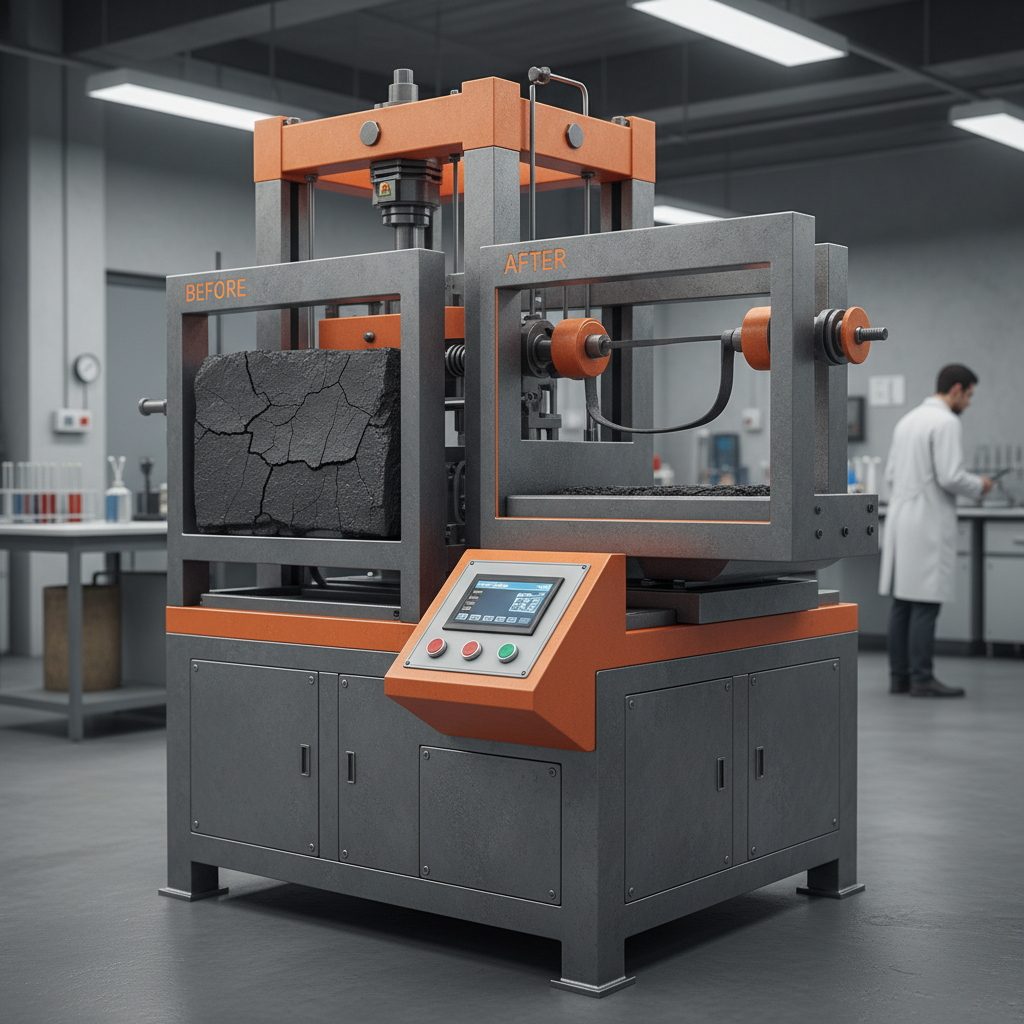
Asphalt Ductility Testing Machine

Global Importance of Asphalt Ductility Testing Machine
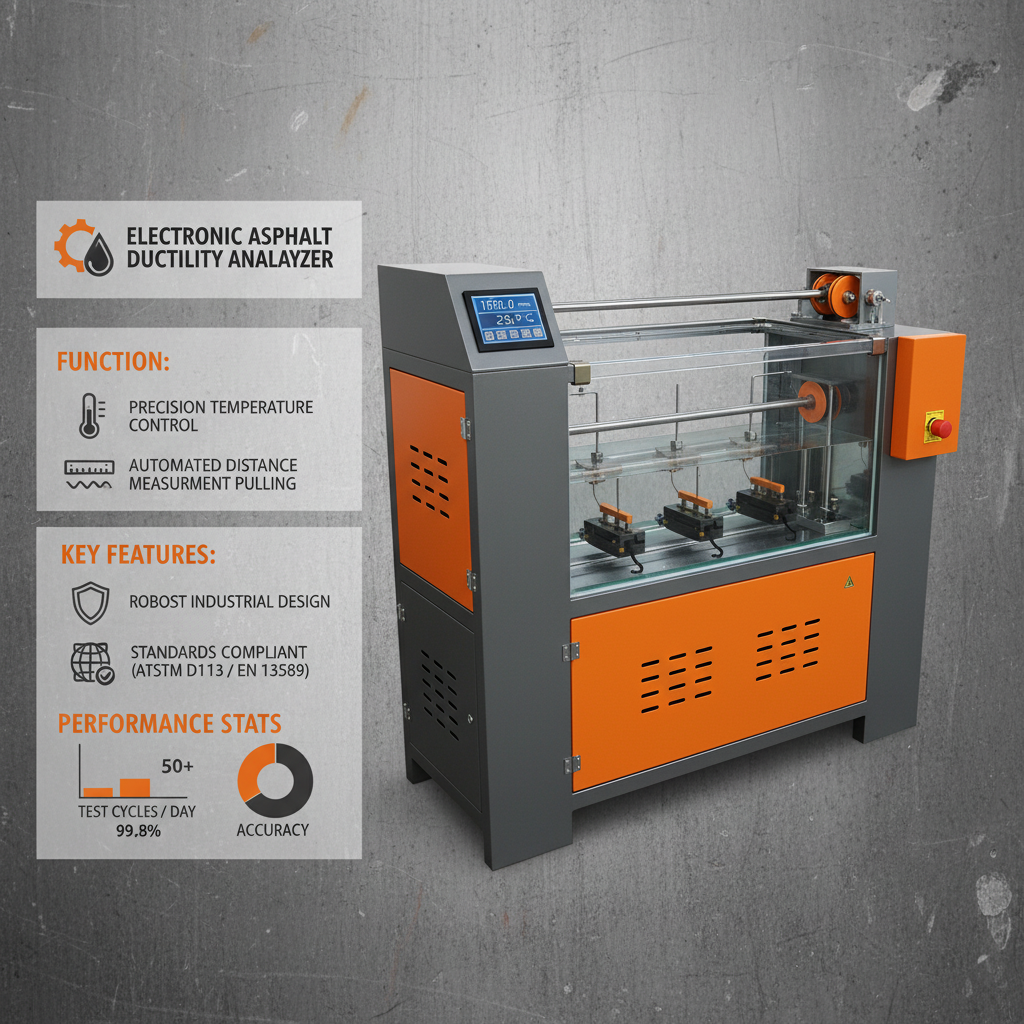
Asphalt Ductility Testing Machine

Across the globe, the demand for resilient infrastructure is skyrocketing as urbanization accelerates. The Asphalt Ductility Testing Machine plays a pivotal role in this expansion, allowing road authorities to verify that the bitumen used in construction can withstand the extreme mechanical stresses of heavy-duty logistics. Without this testing, the risk of "brittle failure" increases, leading to systemic road collapses that disrupt supply chains and endanger lives.

From a regulatory perspective, international bodies like ISO and ASTM emphasize the need for standardized ductility measurements to ensure consistency in material sourcing. An Asphalt Ductility Testing Machine transforms complex chemical properties into a measurable distance (mm), providing a universal language for engineers to determine if a specific grade of bitumen is suitable for a particular climate or traffic volume.

Defining the Asphalt Ductility Testing Machine

In the simplest terms, an Asphalt Ductility Testing Machine is a specialized laboratory instrument designed to measure the degree of elongation of a bitumen sample before it ruptures. It essentially tests the "stretchability" of the asphalt binder. If a material is too brittle, it will crack under cold temperatures; if it is too soft, it will deform (rut) under heat. This machine finds the perfect equilibrium.

The process involves placing a prepared bitumen specimen into a mold, immersing it in a controlled temperature water bath, and pulling it apart at a constant, slow speed. The distance the specimen stretches before snapping is the ductility value. This simple yet profound measurement is what separates a high-quality motorway from a road that requires annual repairs.

Beyond mere measurement, the Asphalt Ductility Testing Machine is a bridge between materials science and civil engineering. It ensures that humanitarian infrastructure projects—such as building roads in remote, disaster-prone areas—are executed with materials that can actually survive the local environment, providing lasting connectivity and dignity to isolated populations.

Core Components of High-Precision Testing

The accuracy of an Asphalt Ductility Testing Machine depends heavily on its temperature control system. Since bitumen viscosity is highly sensitive to heat, a precise water bath capable of maintaining stability within ±0.1°C is essential to ensure that the test results are reproducible and not skewed by thermal fluctuations.

Another critical factor is the constant-speed pulling mechanism. A high-quality Asphalt Ductility Testing Machine utilizes a precision motor and gear system to maintain a steady extension rate (typically 5 cm/min). Any jerk or variation in speed would introduce artificial stress into the bitumen sample, leading to inaccurate ductility readings.

Finally, the structural rigidity and corrosion resistance of the machine's frame are paramount. Given that the Asphalt Ductility Testing Machine operates in a humid environment (the water bath), the use of high-grade stainless steel and anti-corrosive coatings ensures long-term durability and minimizes maintenance downtime in busy commercial labs.

Practical Performance Metrics in Pavement Engineering

When analyzing the output of an Asphalt Ductility Testing Machine, engineers look for specific thresholds that indicate material health. High ductility generally suggests better resistance to fatigue cracking, while excessively high values might warn of susceptibility to permanent deformation.

Comparing different testing methods—such as standard manual pulling versus automated digital extension—reveals significant differences in precision. Modern automated systems reduce human error during the measurement of the breaking point, providing a more reliable dataset for large-scale infrastructure projects.

Comparative Accuracy of Bitumen Testing Methods

Global Applications and Use Cases

The application of the Asphalt Ductility Testing Machine spans across diverse geographic regions. In Nordic countries, where extreme cold is the primary enemy of roads, this machine is used to ensure that bitumen blends are modified with polymers to prevent winter cracking. Conversely, in Southeast Asia and the Middle East, the focus shifts to ensuring that the asphalt does not become too ductile (soft), which would lead to severe rutting under the tropical sun.

Beyond public highways, aviation authorities utilize the Asphalt Ductility Testing Machine to certify runway binders. Because aircraft exert immense pressure during takeoff and landing, the binder must possess a very specific ductility profile to maintain structural integrity. Similarly, in remote industrial zones where heavy mining trucks operate, customized bitumen testing ensures that the access roads can support loads that would crush standard residential pavement.

Long-Term Value and Sustainability Benefits

Investing in a high-precision Asphalt Ductility Testing Machine yields tangible economic value by extending the maintenance cycle of road networks. When the correct material is specified through rigorous testing, the interval between resurfacing projects can be extended by years, saving millions in taxpayer funds and reducing the carbon footprint associated with frequent asphalt production.

From a sustainability perspective, the use of an Asphalt Ductility Testing Machine supports the shift toward "Green Asphalt." Engineers are now incorporating recycled plastics and crumb rubber into bitumen. This machine allows them to verify that these sustainable additives do not compromise the ductility or safety of the road, enabling a circular economy in construction.

Ultimately, the value lies in trust and safety. A road that does not crack unexpectedly provides dignity to the commuter and reliability to the logistics provider. By relying on the data from an Asphalt Ductility Testing Machine, society builds a foundation of trust in the very infrastructure that connects our cities and economies.

Future Innovations in Bitumen Testing Technology

The next generation of the Asphalt Ductility Testing Machine is moving toward full digitalization. We are seeing the integration of IoT sensors that can stream real-time ductility data to cloud platforms, allowing engineers to analyze material batches from across different regional labs simultaneously, ensuring global consistency for multinational projects.

Automation is also reducing the reliance on manual sampling. Future iterations of the Asphalt Ductility Testing Machine will likely incorporate automated sample loading and high-resolution optical cameras to detect the exact millisecond of rupture, eliminating the subjectivity of human observation and providing an indisputable digital record of quality.

Furthermore, the industry is exploring "smart binders" that react to temperature changes. The Asphalt Ductility Testing Machine will evolve to test these materials across a dynamic temperature gradient in a single run, rather than requiring separate tests for different temperatures, drastically increasing lab efficiency.

Technical Analysis of Asphalt Ductility Testing Evolution

Technology Generation Precision Level Labor Intensity Data Reliability
Manual Analog Systems Low (±2mm) Very High Subjective
Semi-Automatic Testers Medium (±1mm) Moderate Consistent
Digital Sensor Machines High (±0.1mm) Low Objective
IoT-Enabled Systems Very High (±0.05mm) Very Low Verifiable
AI-Predictive Testers Ultra High Automated Predictive
Hybrid Material Testers High Moderate Specialized

FAQS

How does temperature affect the results of an Asphalt Ductility Testing Machine?

Temperature has a profound impact on bitumen's viscosity. Higher temperatures generally increase ductility (making the material stretch further), while lower temperatures make it brittle. This is why an Asphalt Ductility Testing Machine must have a highly stable water bath; even a 1-degree variance can lead to significantly different ductility measurements, potentially resulting in the wrong material grade being approved for a project.

What is the difference between standard ductility and modified bitumen ductility?

Standard bitumen follows a natural paraffinic or naphthenic curve. Modified bitumen (using polymers like SBS) is designed to have a wider range of ductility across extreme temperatures. An Asphalt Ductility Testing Machine allows engineers to verify that these additives are properly blended, ensuring the road doesn't crack in winter or melt in summer.

How often should an Asphalt Ductility Testing Machine be calibrated?

To maintain ISO compliance, it is recommended to calibrate the Asphalt Ductility Testing Machine every 6 to 12 months. Calibration focuses on the temperature accuracy of the water bath and the linear speed of the pulling mechanism. Regular calibration prevents "drift" in results, which is critical when certifying materials for government-funded highway projects.

Can this machine be used for other types of binders besides asphalt?

While primarily designed for bitumen, the core mechanical principle of an Asphalt Ductility Testing Machine (constant speed extension in a temperature-controlled environment) can be adapted for other thermoplastic binders or specialized adhesives, provided the molds and temperature ranges are adjusted to fit the specific material properties.

What are the most common causes of test failure in ductility testing?

Common causes include air bubbles trapped in the bitumen specimen during pouring, improper temperature stabilization of the water bath, and misalignment of the pulling grips. A professional Asphalt Ductility Testing Machine minimizes these risks through precision engineering and standardized mold designs that ensure uniform sample preparation.

Is an automated machine significantly better than a manual one?

Yes, significantly. Manual machines rely on the operator's eye to determine the breaking point and the start/stop time. An automated Asphalt Ductility Testing Machine uses digital encoders and timers to capture the exact moment of failure, removing human bias and providing a digital audit trail that is essential for quality assurance and legal compliance.

Conclusion

The Asphalt Ductility Testing Machine is far more than a simple lab tool; it is a cornerstone of modern civil engineering that ensures the safety, durability, and sustainability of our global road networks. By providing precise data on the rheological properties of bitumen, it allows for the creation of infrastructure that can withstand extreme climates and heavy loads, ultimately reducing costs and saving lives through better road quality.

As we move toward a future of smarter cities and greener materials, the role of precision testing will only grow. We encourage laboratories and construction firms to invest in high-accuracy, automated testing solutions to stay ahead of evolving international standards and contribute to a more resilient world. Visit our website to learn more about our professional solutions: www.czlabinstrument.com

William Thompson

William Thompson

William Thompson is a Senior Research Engineer in the R&D Department at Cangzhou Blue Beauty Instrument Co., Ltd. He specializes in the development of new testing methodologies and instrument designs for building materials and construction applications. William holds a Master’s degree in Mechanical Engineering and contributes to the company's patent portfolio through innovative research. He collaborates closely with the production department to translate research findings into practical, high-performance products. He excels in the design of instruments that are user-friendly and provide accurate, reliable data, contributing to the company’s leadership position in the industry. William is always exploring new technologies and materials to enhance product functionality.
Previous Precision Electronic Asphalt Ductility Testing Machine for Roads
Leave Your Message

If you are interested in our products, you can choose to leave your information here, and we will be in touch with you shortly.