
Mastering Soil: The Compactor Revolution
To be honest, when we talk about a Universal Material Testing Machine, many of us probably picture a sophisticated piece of equipment for metals or plastics, right? Measuring tensile strength, bending limits, and all that jazz. But in the trenches of civil engineering, particularly in geotechnical analysis, 'universal' takes on a different, yet equally critical, meaning. Today, I want to dive into an unsung hero of infrastructure development: the Lab Soil Multifunctional Compactor Electric Compaction Instrument.
Why Soil Compaction? It's the Foundation of Everything!
Actually, if you think about it, the ground beneath our feet, roads, and buildings is the ultimate foundation. Its stability directly impacts the longevity and safety of any structure. That's where accurate soil compaction testing comes into play. From water conservancy dams and bustling highways to critical railway lines, airports, and even the humble building foundation, understanding the relationship between soil density and water content is paramount. Frankly, without it, you're building on guesswork.
The industry trend, as I've observed over the years, is unmistakably moving towards greater precision, efficiency, and — crucially — automation. Gone are the days of purely manual, labor-intensive compaction tests that could introduce variability. Modern instruments, like our Lab Soil Multifunctional Compactor, are designed to streamline this process, ensuring consistent results while easing the burden on researchers and engineers.
The Nitty-Gritty: How It Works and What It Achieves
So, what exactly does this magnificent machine do? In essence, it helps determine the optimal water content and maximum dry density of soil. This data is absolutely vital for plotting the crucial curves that guide engineers in preparing stable ground. It’s particularly adept at handling cement-stabilized soil (before cement hydration, of course) and lime-stabilized soil, which are common in many construction projects.
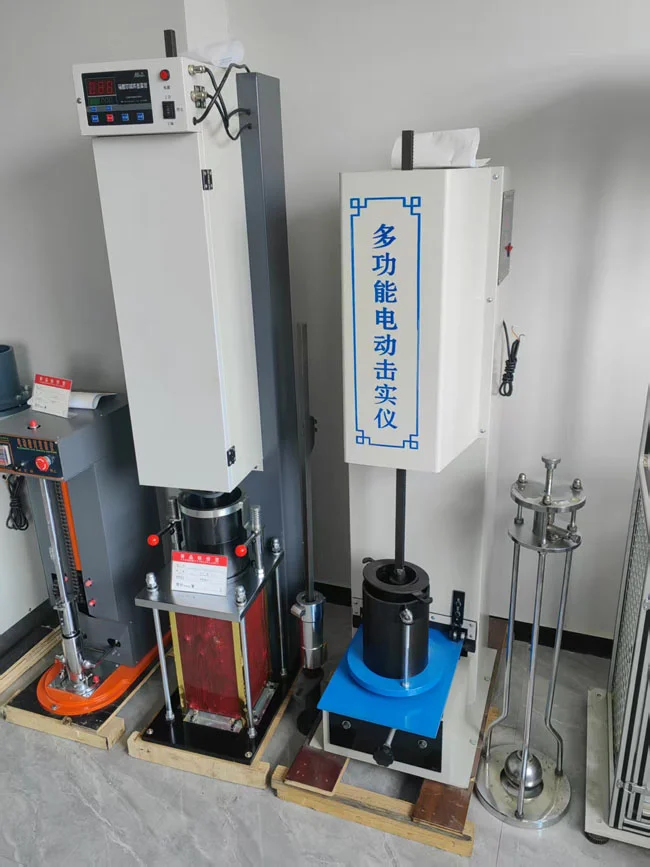
The Process Flow: From Sample to Standard
· Materials: Primarily soil samples, often mixed with stabilizers like cement or lime.
· Methods: The instrument performs both Light Compaction and Heavy Compaction tests, following precise drop heights and hammer weights.
· Testing Standards: This is where the 'multifunctional' aspect truly shines. It complies with a range of authoritative standards, including the People’s Republic of China industry standard (JTG3430 – 2020), as well as Ministerial, National, and Water Conservancy specific standards. This adaptability is, quite frankly, a huge advantage.
· Output: Engineers gain the precise data needed to plot water content vs. dry density curves, leading to optimal water content and maximum dry density values. This data then informs CBR (California Bearing Ratio) tests and resilience modulus tests, which are crucial for pavement design.
Technical Specifications (A Glimpse Under the Hood)
Here’s a snapshot of what makes this instrument tick, conforming to multiple regulatory bodies:
Parameter | Ministerial Standard | National Standard | Water Conservancy Standard |
Hammer Weight (Heavy) | 4.5 kg | 4.5 kg | 4.5 kg |
Drop Height (Heavy) | 450 mm | 457 mm | 457 mm |
Test Cylinder (Heavy) | φ152mm × 170mm | φ152mm × 166mm | φ152mm × 116mm |
Hammer Weight (Light) | 2.5 kg | 2.5 kg | 2.5 kg |
Drop Height (Light) | 300 mm | 305 mm | 305 mm |
Test Cylinder (Light) | φ100mm × 127mm | φ102mm × 116mm | φ102mm × 116mm |
Hammering Speed | 37 – 39 times/min | 28 – 30 times/min | 28 – 30 times/min |
Voltage | 220V | ||
Power | 750W | ||
Weight | ≈ 170kg (real-world use may vary slightly) | ||
Advantages and What Sets This Instrument Apart
Many customers say the biggest boon of this instrument is its automation. It truly reduces labor intensity, allowing scientists and engineers to focus on analysis rather than repetitive tasks. Features like digital display, auto counting, auto control, automatic shutdown, and even automatic lifting of the hammer out of the test bucket are not just conveniences; they significantly boost efficiency and consistency. The upgrade from a chain-drive to a robust rack-and-pinion drive is a game-changer, eliminating frustrating issues like dropped hammers. This is a clear step up from older designs, which, let's be honest, could be a bit finicky.
Why Choose This Compactor? A Quick Comparison
Feature | Lab Soil Multifunctional Compactor | Older/Basic Models (Typical) |
Drive System | Rack-and-pinion (reliable, robust) | Chain-drive (prone to hammer issues) |
Automation | Full automation (counting, control, shutdown, lift) | Limited or no automation (manual intervention) |
Standard Compliance | Ministerial, National, Water Conservancy (multi-standard) | Often single-standard or less adaptable |
Efficiency & Accuracy | High (reduced human error, consistent strikes) | Moderate (variability possible with manual input) |
Ease of Use | User-friendly, digital display | More manual setup and monitoring |
Customization and Real-World Application
I guess what makes this instrument truly versatile – almost a Universal Material Testing Machine in its specialized field – is its adaptability. It comes with modules for both sand and spodosol, accommodating both dia. 152 and dia. 100 molds. This modularity means it can tackle a wide array of soil types and project requirements. Imagine a large-scale railway project: ensuring the sub-ballast is perfectly compacted is non-negotiable. This compactor provides the consistent, accurate data needed to achieve those critical parameters, ultimately ensuring the long-term service life of the tracks.
Case Study Snippet (Hypothetical)
During the construction of a new airport runway extension, engineers needed to quickly determine the optimal compaction parameters for a lime-stabilized subgrade. Using our multifunctional compactor, they were able to run numerous light and heavy compaction tests across various moisture contents within a single day. The automated cycling and precise hammer strikes dramatically reduced the time typically spent on such tests, allowing for rapid data analysis and timely adjustments to compaction efforts on-site. The project maintained its strict schedule and achieved superior subgrade stability, proving the instrument's invaluable contribution.
Who Benefits? The Industries We Serve
This instrument is an absolute must-have for traffic scientific research departments, colleges and universities teaching civil and geotechnical engineering, engineering construction units, commercial laboratories, and even field testing operations. Its robust design, weighing in at around 170kg, implies a good service life, built for the rigors of frequent use.
In fact, while not a Universal Material Testing Machine in the general sense, the Lab Soil Multifunctional Compactor Electric Compaction Instrument is undeniably universal in its specific, critical domain. It's an investment in precision, efficiency, and the long-term stability of our infrastructure.
Authoritative References
1. JTG3430 – 2020. Test Methods of Soils for Highway Engineering. Ministry of Transport of the People’s Republic of China.
2. ASTM D1557 / D1557M - 12. Standard Test Methods for Laboratory Compaction Characteristics of Soil Using Modified Effort. ASTM International.
3. ASTM D698 / D698M - 12. Standard Test Methods for Laboratory Compaction Characteristics of Soil Using Standard Effort. ASTM International.
4. Das, Braja M. (2009). Principles of Geotechnical Engineering. Cengage Learning.


