Advanced biochemical incubators Solutions for Equatorial Guinea

Precision engineering for materials testing and laboratory analysis, tailored to the equatorial climate and industrial needs of Equatorial Guinea.

Advanced biochemical incubators Solutions for Equatorial Guinea

Providing world-class material testing and sample preparation instruments to empower the scientific research and industrial quality control sectors in Equatorial Guinea.

Laboratory Infrastructure Status in Equatorial Guinea

Analyzing the challenges of precision instrumentation in high-humidity tropical environments.

Equatorial Guinea's laboratory sector faces unique environmental challenges. The high ambient temperature and extreme humidity levels often compromise the stability of sensitive lab incubators, requiring specialized cooling and insulation technologies to ensure experimental accuracy.

In the industrial sector, particularly within oil, gas, and agricultural quality control, there is an increasing demand for robust sample preparation. The reliance on imported Laboratory sample Crusher equipment highlights a gap in localized high-durability machinery capable of withstanding the regional power fluctuations.

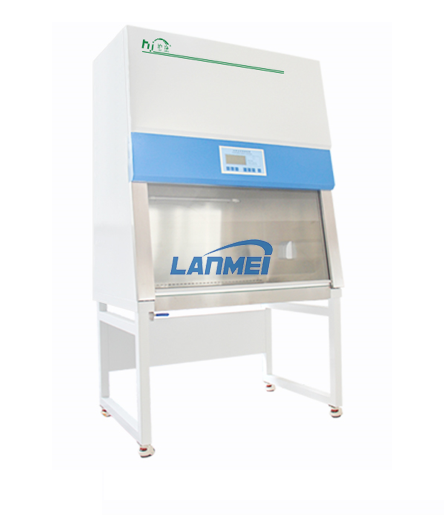
Current laboratory setups in Malabo and Bata are transitioning from basic storage to active biochemical analysis. This shift necessitates the deployment of high-precision Cooling incubator units that can maintain strict thermal gradients despite external climatic volatility.
Evolution of Material Testing Technology

From manual preparation to automated biochemical control systems.

Market Development History

Historically, laboratories in the region relied on basic thermal chambers (pre-2010), which lacked precise PID control, often leading to inconsistent results in biochemical assays and material stress tests.

Between 2010 and 2020, the introduction of digital Lab BOO incubator technology allowed for better temperature programmable cycles, enabling more complex biological research and pharmaceutical stability testing.

Since 2021, the focus has shifted toward "Integrated Lab Ecosystems," where sample preparation via advanced crushing technology is seamlessly linked with climate-controlled incubation for rapid analysis.

Future Development Trends

Smart Remote Monitoring

Integration of IoT modules into incubators to allow researchers in Equatorial Guinea to monitor sample status via mobile devices, reducing the risk of sample loss during power outages.

Energy-Efficient Cooling

Transitioning toward green refrigerants and inverter compressors to lower the energy footprint of high-capacity cooling systems in tropical zones.

Automated Sample Throughput

The shift toward automated crushing and weighing systems to minimize human error and exposure to hazardous materials during the preparation phase.

Future Trends & Strategic Outlook

Navigating the next 5 years of instrumentation innovation in Equatorial Guinea.

Climate-Adaptive Engineering
Developing insulation materials specifically for high-humidity equatorial regions to maintain thermal stability.
AI-Driven Sample Processing
Implementing AI algorithms to optimize crushing patterns and incubation durations for faster lab turnover.
Regulatory Standardization
Aligning regional testing standards with ISO/IEC 17025 through upgraded precision instrumentation.
Modular Lab Design
Developing plug-and-play instrument clusters that allow laboratories to scale their capacity rapidly.

Industry Outlook

Based on current Google search trends for "scientific laboratory equipment Africa," we anticipate a 15% CAGR in the demand for high-precision thermal control systems. The convergence of healthcare investment and industrialization in Equatorial Guinea will drive a move toward more specialized, high-end biochemistry tools.

The future will be defined by "Stability and Sustainability." Equipment that offers low maintenance requirements and high resistance to corrosion from humid sea air will dominate the local market share.

Localized Applications in Equatorial Guinea

Practical deployment scenarios for material testing and biochemical instruments.

01. Petroleum By-product Analysis

Using Laboratory sample Crusher units to process hydrocarbon-contaminated soil samples for environmental impact assessments in the oil-rich coastlines.

02. Tropical Agriculture Research

Deploying biochemical incubators to study the growth rates of local cocoa and coffee variants under simulated climatic stresses.

03. Pharmaceutical Stability Testing

Utilizing Cooling incubator systems to ensure the shelf-life of imported medicines in the high-temperature environment of Malabo.

04. Soil Mineralogy & Mining

Implementing high-torque sample crushing for geological surveys of mineral deposits in the mainland forests to ensure homogenous sample preparation.

05. Clinical Microbiology Diagnostics

Applying precision lab incubators for the cultivation of pathogens in urban health centers to improve diagnostic accuracy for infectious diseases.

Brand Story

Global Development Journey of Cangzhou Lanmei Import and Export Trade Co., Ltd.

Foundation & Vision

Established with a mission to bridge the gap between high-end manufacturing and emerging markets, focusing on reliability in extreme conditions.

Technical Breakthroughs

Developed proprietary thermal insulation techniques that solved the common "temperature drift" problem in tropical laboratory environments.

Global Expansion

Successfully expanded into the African market, establishing a reputation for instruments that combine precision with industrial-grade durability.

Quality Certification

Achieved international certifications ensuring that every unit meets global E-E-A-T standards for scientific reliability and safety.

Customer-Centric Future

Committing to localized support and customized engineering to solve specific pain points in the materials testing industry.

Comprehensive Instrument Portfolio for Equatorial Guinea

A curated selection of sample preparation and thermal control systems designed for regional industrial demands.

Frequently Asked Questions - Equatorial Guinea

Expert answers to common technical queries regarding lab instrumentation.

How to maintain a Cooling incubator in high-humidity areas like Malabo?

We recommend using our climate-adaptive models with reinforced gaskets and automated defrost cycles to prevent condensation and maintain precise internal temperatures.

Can the Laboratory sample Crusher handle hard geological materials?

Yes, our crushers are built with high-chromium steel alloy jaws specifically designed for high-hardness mineral samples common in regional geological surveys.

What is the power requirement for Lab BOO incubator units?

Our units are compatible with standard voltages and we strongly suggest pairing them with a voltage stabilizer to protect the PCB from local power surges.

Are biochemical incubators suitable for pharmaceutical storage?

Absolutely. Our biochemical series provides high-uniformity temperature distribution, which is critical for pharmaceutical stability and vaccine research.

What are the main advantages of professional lab incubators over modified fridges?

Professional units offer PID precise control, alarm systems for temperature deviations, and superior insulation, ensuring a stable environment that standard fridges cannot provide.

Do you provide calibration certificates for instruments shipped to Equatorial Guinea?

Yes, every instrument undergoes rigorous factory calibration and is shipped with a certificate ensuring compliance with international measurement standards.

Request a Technical Consultation

Ready to upgrade your laboratory capabilities in Equatorial Guinea? Our engineers are available to design a customized instrumentation package for your facility.

Contact Us Now
Leave Your Message

If you are interested in our products, you can choose to leave your information here, and we will be in touch with you shortly.