0%

Table of Contents

Look, I've spent the last twenty years breathing in dust on construction sites, hauling materials, and talking shop with engineers. And let me tell you, a reliable Bitumen Stability Tester isn't some lab curiosity – it's the backbone of building roads that stay built. We're not just talking about asphalt; we're talking about infrastructure, about safety, about a project finishing on time and under budget. It's about knowing your mix is going to hold up, even when Mother Nature throws everything she has at it.

For too long, quality control relied on guesswork and outdated methods. You'd send samples to a lab, wait days for results, and hope everything lined up. Now, with a modern Bitumen Stability Tester, you get immediate feedback right on site. That means you can adjust your mix in real-time, catch problems before they become expensive headaches, and deliver a product you can actually stand behind. It's about accountability and preventing premature failure.

And honestly, the cost of not having a reliable tester far outweighs the investment. Think about the cost of road repairs, the delays, the disruptions… It adds up fast. A good Bitumen Stability Tester isn't an expense; it's insurance.

Bitumen Stability Tester

The Core Importance of Bitumen Stability Testing
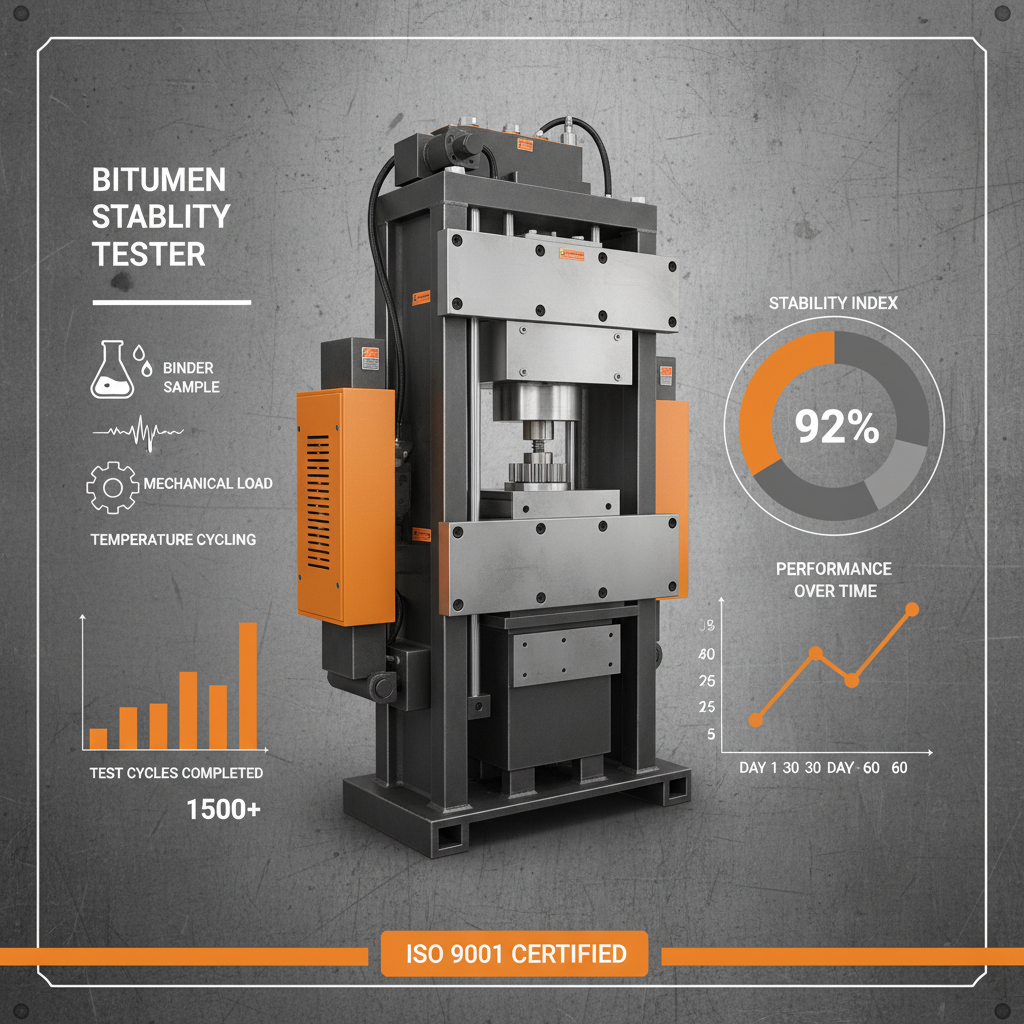
Bitumen Stability Tester

Let's be clear: asphalt failure isn't just a pothole problem. It’s a safety issue, a financial drain, and a sign of compromised infrastructure. A solid Bitumen Stability Tester is your first line of defense against that. It gives you concrete data, not just gut feelings, about the long-term performance of your asphalt mix.

I’ve seen projects delayed for weeks because of failing asphalt. The costs are staggering – material, labor, traffic disruption. A proper test, performed regularly, can prevent those headaches. It's not glamorous work, but it's crucial work.

Global Context and Industry Standards

The need for durable infrastructure is global. From the highways crisscrossing North America to the expanding road networks in Asia and Africa, the demand for reliable asphalt is constant. Organizations like ASTM International and the European Committee for Standardization (CEN) set rigorous standards for bitumen stability testing, and for good reason. These standards aren’t arbitrary; they're based on decades of research and real-world performance data.

We’re talking about billions of dollars invested in infrastructure every year. The World Bank and UN agencies are heavily involved in funding these projects, and they require adherence to these standards. Using equipment that meets those standards – like a quality Bitumen Stability Tester – is non-negotiable.

Ignoring these standards doesn’t just risk project failure; it risks lives. Poorly constructed roads contribute to accidents, slow down economic development, and hinder access to essential services.

Defining Bitumen Stability Testing

Simply put, Bitumen Stability Testing assesses the ability of an asphalt mix to resist deformation under load and environmental stressors. It’s not just about strength, though that’s important. It’s about resisting rutting (those grooves you see in highways), cracking, and overall degradation over time. It's about how well the bitumen binder holds the aggregate together.

This isn't a new concept, mind you. They've been testing asphalt stability for decades. But the methods have evolved. We've moved beyond simple penetration tests to more sophisticated methods that simulate real-world conditions, like the Hamburg Wheel Tracking Test and the Asphalt Pavement Analyzer.

The modern Bitumen Stability Tester allows us to accurately predict how a road will perform over its lifespan, allowing us to minimize maintenance and maximize investment.

Key Factors in Effective Bitumen Stability Testing

There are a few key things that make a Bitumen Stability Tester truly effective. First, accuracy is paramount. The machine needs to deliver consistent, repeatable results. You can’t make informed decisions based on unreliable data.

Second, versatility is key. Different projects require different tests. A good machine should be able to perform a range of tests – from simple viscosity measurements to complex dynamic creep tests – to meet diverse needs.

Bitumen Stability Tester Performance Metrics

Real-World Applications of Bitumen Stability Testing

You'll find Bitumen Stability Testing happening everywhere roads are built and maintained. Highway departments use them for quality control during construction and for monitoring existing roads.

Airport authorities rely on it to ensure runway surfaces can withstand the weight and stress of heavy aircraft. It's not just roads, either. Parking lots, private driveways, even bicycle paths – anywhere asphalt is used, stability testing is essential.

Advantages and Long-Term Value Proposition

The benefits are clear. Reduced maintenance costs, increased road lifespan, improved safety – these are all direct results of investing in reliable Bitumen Stability Testing.

But it goes beyond that. A robust testing program builds trust – trust with stakeholders, with the public, and with your own team. It demonstrates a commitment to quality and a willingness to invest in long-term performance.

And let’s not forget the environmental impact. By extending the life of roads, we reduce the need for frequent reconstruction, conserving resources and minimizing waste.

Future Trends and Innovations in Testing

We’re seeing a push towards more automated testing procedures, with machines that can perform multiple tests with minimal operator intervention. Data analytics are also becoming increasingly important. The ability to collect and analyze data from multiple tests allows us to identify trends and predict potential problems before they occur.

I also expect to see more integration of sensor technology, with sensors embedded directly into the asphalt mix to provide real-time data on its performance. This will revolutionize the way we monitor and maintain our roads.

And of course, there's the growing focus on sustainability. We're exploring new binder materials – recycled plastics, bio-based binders – and developing new tests to ensure these materials perform as well as traditional asphalt.

Summary of Challenges and Solutions in Bitumen Stability Testing

Challenge Impact on Testing Proposed Solution Equipment Needs
Operator Variability Inconsistent Results Automated Testing Procedures Automated Bitumen Stability Tester
Limited Test Range Inability to Evaluate Diverse Mixes Versatile Testing Equipment Multi-functional Bitumen Stability Tester
Data Management Complexity Difficulty in Trend Analysis Integrated Data Analytics Software Software Compatible with Tester
Calibration Requirements Accuracy Degradation Over Time Regular Calibration Schedule Calibration Standards and Tools
Environmental Sensitivity Temperature & Humidity Effects Climate-Controlled Testing Environment Enclosed Testing Chamber
Cost of Equipment Budget Constraints for Smaller Agencies Leasing or Shared Resource Programs Affordable & Reliable Tester Options

FAQS

What is the typical lifespan of roads tested with a reliable Bitumen Stability Tester?

Roads constructed with asphalt mixes rigorously tested using a reliable Bitumen Stability Tester generally exhibit a significantly longer lifespan – often exceeding 15-20 years with proper maintenance. This is a substantial improvement compared to roads built without thorough quality control, which may require major repairs or resurfacing after just 5-7 years. The key lies in the accurate prediction of long-term performance and preventative maintenance informed by the test results.

How often should I perform Bitumen Stability Testing during a road construction project?

Best practice dictates performing Bitumen Stability Testing at multiple stages: during raw material selection (bitumen and aggregates), during mix design in the laboratory, and at regular intervals during construction, particularly with each new batch of asphalt. This ensures consistency throughout the project. At a minimum, testing should be performed before, during, and after paving. Continuous monitoring catches potential issues immediately.

What are the key differences between the various Bitumen Stability Testing methods available?

Several methods exist, each simulating different stress factors. The Hamburg Wheel Tracking Test assesses rutting resistance, the Asphalt Pavement Analyzer evaluates fatigue cracking, and the Direct Shear Test measures cohesion and adhesion. The choice depends on the specific project requirements and the anticipated traffic loads. Modern Bitumen Stability Testers often offer multiple testing capabilities in a single unit.

How does the quality of the Bitumen Stability Tester affect the reliability of test results?

The quality of the Bitumen Stability Tester is paramount. Accurate, precise, and well-calibrated equipment is essential for reliable results. Cheap or poorly maintained testers can introduce errors, leading to incorrect assessments and potentially compromised road performance. Investing in a reputable brand with robust quality control is crucial.

What training is required to operate a Bitumen Stability Tester effectively?

Proper training is absolutely essential. Operators must understand the principles behind the tests, the correct procedures for sample preparation and testing, and the interpretation of results. Many Bitumen Stability Tester manufacturers offer training programs to ensure operators are fully qualified. Ongoing training is recommended to stay up-to-date with the latest standards and techniques.

What is the cost range for a high-quality Bitumen Stability Tester?

The cost of a high-quality Bitumen Stability Tester can vary considerably depending on its features and capabilities. Generally, expect to invest between $20,000 and $100,000 or more. While it's a significant investment, the long-term cost savings from reduced maintenance and increased road lifespan far outweigh the initial expense. Leasing options are also available.

Conclusion

A reliable Bitumen Stability Tester isn’t just a piece of equipment; it’s an investment in durable infrastructure, public safety, and responsible resource management. From global standards to real-world applications, the importance of accurate and consistent testing cannot be overstated. It provides the data-driven insights needed to build roads that last, saving time, money, and potential heartache down the line.

Looking ahead, the integration of automation, data analytics, and sustainable materials will continue to drive innovation in this field. Investing in cutting-edge testing technology today will position you to meet the challenges of tomorrow. For reliable results and top-notch support, visit our website: www.czlabinstrument.com.

Ethan Turner

Ethan Turner

Ethan is the Marketing Director at Cangzhou Jiujiang, focusing on expanding the brand's presence in North America. With over a decade of experience in outdoor apparel marketing, Ethan leverages his knowledge to promote the company’s PU rainwear, emphasizing its BSCI and GRS certifications.

Previous The Digital Marshall Stability Tester Revolutionizing Road and Infrastructure Quality
Next Comprehensive Asphalt Testing Equipment for Road and Infrastructure Quality Control
Leave Your Message

If you are interested in our products, you can choose to leave your information here, and we will be in touch with you shortly.